Mesonomics: Rescaling Political Economy
Methods and Data
A major challenge for comparative and international political economists is the discrepancy between the behavior of statistical aggregates and that of individual agents. Our theories and methods of accounting remain separated between macro-institutional processes and micro-level outcomes in individual firms, organizations, and sectors. To assume away complexity by ignoring one or the other is to engage in what Thomas Oatley has called the reductionist gamble.
With the advent of economic statecraft and the weaponization of markets for geopolitical purposes comes an urgent need to understand how states and firms interact across markets, supply chains, and financial networks. The discovery of such meso-level processes has been labeled mesonomics.
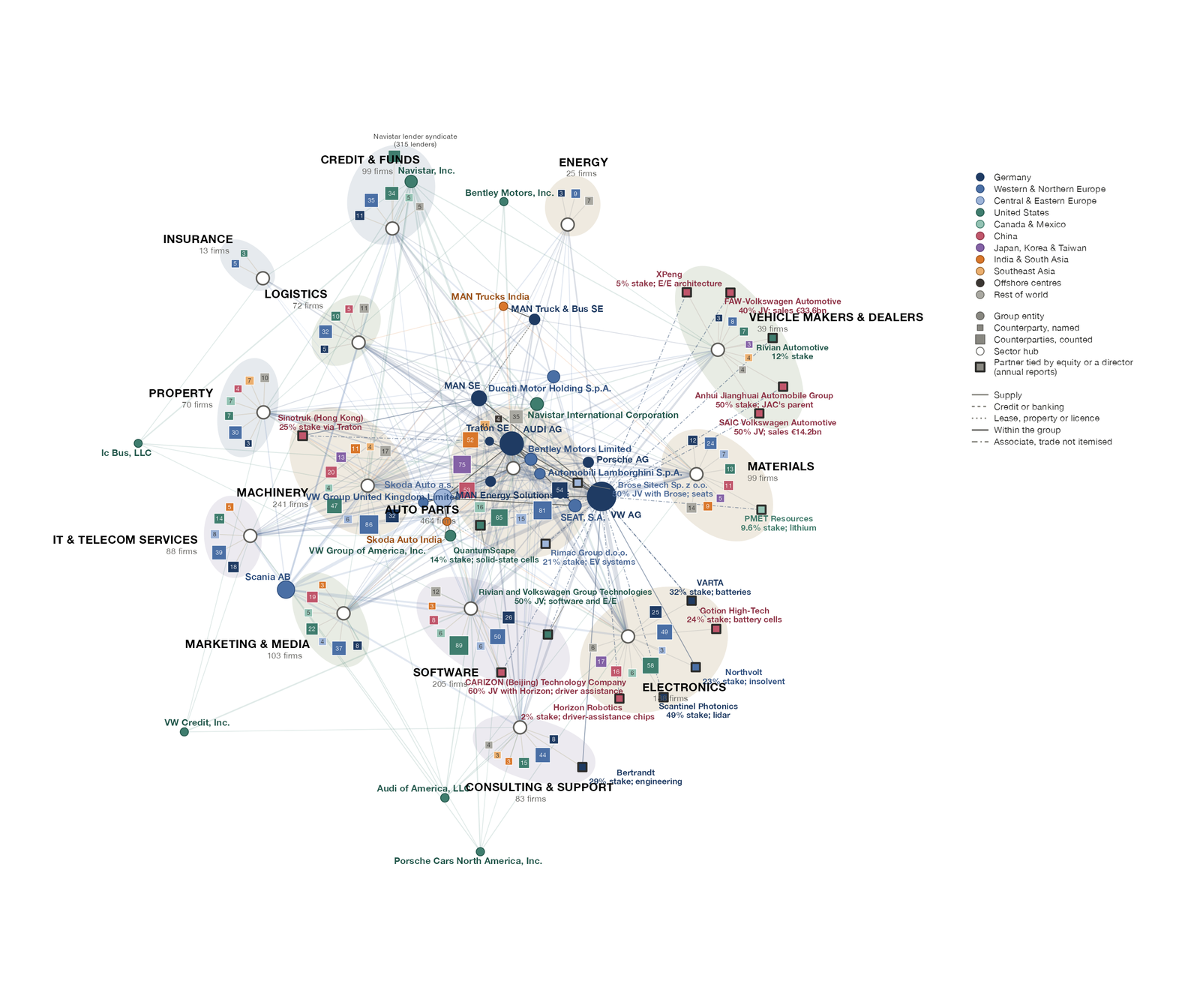
The more widespread availability of firm-level data and the computational methods to analyze them now allows political economists to get more serious about addressing these questions. In my current work, firm-level data play a major role. Apart from the economic calculus project outlined above, I use data on the automobile industry to map the geographical dispersion and organization of car makers’ supply chains.